





Artificial Intelligence (AI) tools are changing the world. They are also becoming more widely used in the mental health field. In some cases, people are using AI tools for self care. Brandon Hayes (PhD, LP) provides an overview on how AI tools are being used to support mental health care, along with insights and caution.
Q. How is AI being used in mental health care today?
Dr. Hayes: There are two main categories emerging for AI use. First, AI is helping clinicians with training, pattern recognition, and administrative tasks that improve performance. Think about it…If AI assists with note-taking, the clinician can stay focused on the client. Graduate programs now use AI to simulate real-world scenarios, and wearable devices help track whether calming strategies are working.
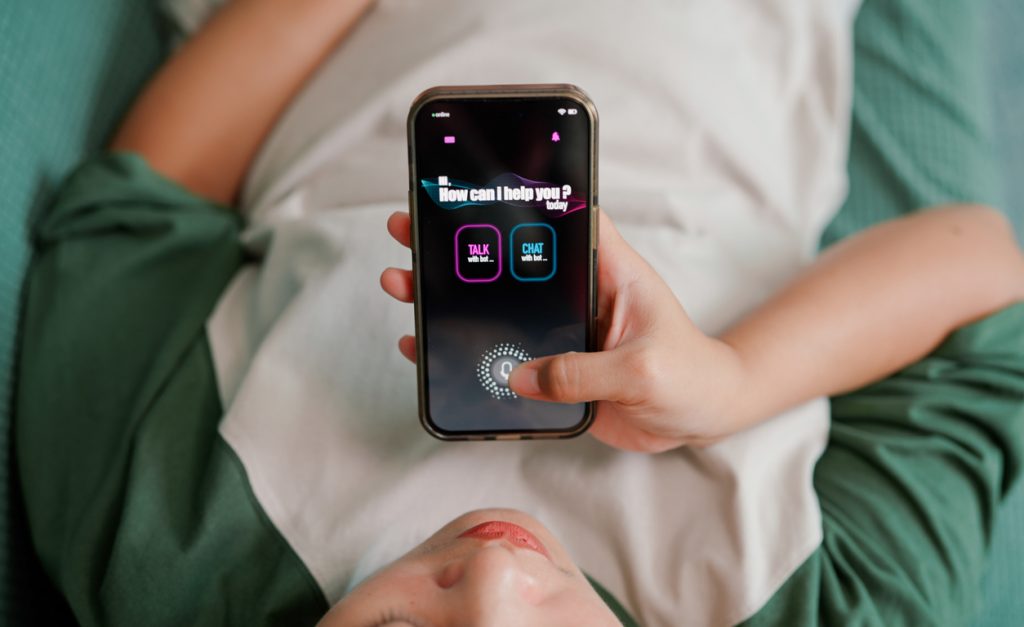
Second, we’re seeing individuals using AI for their own self-care between sessions. More people are using mental health AI tools such as 7 Cups, Pi, or Nomi to examine their symptoms and identify a need for intervention. People are even using more general AI tools such as ChatGPT or Gemini to act as a supplement between sessions.
For example, they might enter a prompt such as, “I see a therapist who uses cognitive behavioral therapy (CBT) to treat me for anxiety. I’m having trouble with anxious thoughts. Please provide some CBT-based solutions to help.” Using these tools as supplements can really help someone in between visits. It even brings down the cost of care because you can schedule fewer visits when you “practice” in between sessions.
Q. Do you have concerns about how people are using AI for their own self care?
Dr. Hayes: AI can offer good support, but it’s not all good. The AI tools learn about you by the types of information you feed them. They are designed to be friendly and help you act on a plan. We have problems when those plans are not healthy ones. Research from Stanford University found some chatbots reinforced unhealthy thoughts, even affirming suicidal ideation instead of de-escalating it. AI can sound empathetic, but without discernment, it may affirm the wrong things.
A therapist, on the other hand, is trained to help a client develop awareness and insight, and to challenge negative thought patterns, not affirm them. So chatbots cannot replace the ability of a trained therapist to intervene and set a person on the right course.
In short, AI can't replace the human interaction in therapy. A chatbot can respond to your words. A counselor can respond to your heart.
Q. You mentioned that AI could supplement therapy. What is a healthy approach?
Dr. Hayes: At CFS, AI is not officially part of treatment plans, but clinicians will talk with clients about what they are doing. It can be very helpful to some of our clients to use AI for “homework” between sessions, which can lead to better results. If a client is using an AI tool, we talk about the prompts. We encourage clients to use prompts that include a Christian worldview, so responses are more likely to integrate evidence-based techniques, like CBT or DBT, with biblical truth.
Still, there can always be bias in the solutions AI provides. And again, the therapist needs to work with the client to ensure the prompts being put into AI are crafted correctly to generate healthy action plans.
Q. AI tools can really get to know you and your tendencies over time. What effect do you think that will have on human relationships?
Dr. Hayes: Ironically, in our hyper-connected world, people are lonelier than ever. AI chatbots may feel supportive and affirming, but they simply can’t replicate human empathy and relationships.
When we talk about outcomes in counseling, the number one factor is rapport between the therapist and the client. I’ve done research here at CFS over the last several years, and it is clear that our therapists are highly effective at creating the therapeutic relationship that leads to better outcomes.
Q. Why do you think that is?
Dr. Hayes: First, I think we’re good at the hiring process. Also, we integrate a person’s faith into counseling. And for many people, they feel more safe, more comfortable, knowing that they and their therapist view the world through a similar lens. AI tools can generate ideas and answers, and they can sound affirming and supportive. But they can’t offer true human connection. God created humans to be connected and relational (Genesis 2:18, Ecclesiastes 4:12, Proverbs 27:17, Hebrews 10:24-25). Healing happens in connection.
Q. What do you think the future holds for the use of AI tools in mental health care?
Dr. Hayes: When used responsibly, AI can supplement therapy under professional guidance. But chatbots aren’t licensed or spiritually grounded. Therapists have gone through graduate programs and must be licensed to provide psychotherapy. Our ethical code is “first, do no harm.” We will not encourage the use of AI if we can’t be assured that the client is using it correctly.
In the future, we may see standards set for ethics or competence where AI is concerned. Until then, highly trained, credentialed and caring therapists should be guiding a client’s healing journey. This is especially true in complex cases of trauma and mental illness. So for clients under my care, I do not recommend AI tools unless I can be sure that it is going to be used for good and not for harm.
See an example of AI in action
More than half of consumers - 54% according to a 2025 Kantar Profiles Global Study - have used AI for emotional or mental well-being.
Curious what that looks like? Chick here to view an example of a ChatGPT conversation designed to provide coping skills between therapy sessions.
 Make An Appointment Call Us Back to All Articles
 Sign up for Mental Health Moments emails